
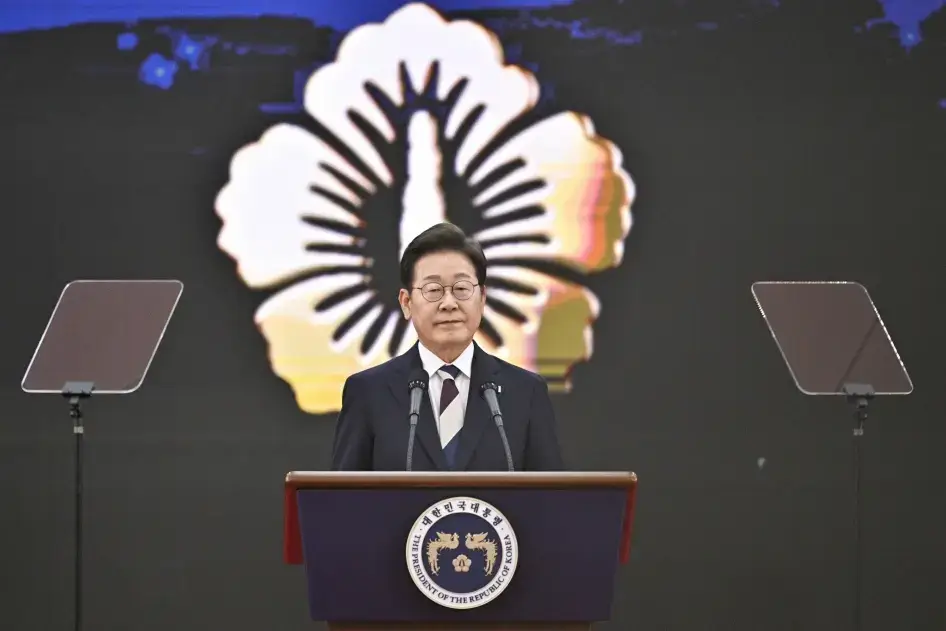
The winds of change are sweeping through South Korea as President Lee Jae-myung’s administration ushers in a transformative era for human rights. Following the tumultuous impeachment of former President Yoon Suk-yeol—whose brief but controversial martial law declaration in December 2024 ignited nationwide protests—South Korea stands at a pivotal crossroads. Lee’s inauguration in June 2025 signaled not just a political shift but a profound recommitment to democracy, equality, and human dignity. This new leadership is already driving groundbreaking reforms, from recognizing same-sex partnerships to pioneering corporate accountability, while confronting systemic discrimination and redefining North Korea engagement.
The Post-Yoon Reckoning: Restoring Democratic Foundations
The shadow of President Yoon’s administration looms large over South Korea’s human rights landscape. His 15-month tenure saw alarming erosions of civil liberties: criminal defamation lawsuits targeting critics, misuse of the National Security Law to stifle dissent, and the near-catastrophic martial law decree of December 3, 2024. That night, Yoon ordered the arrest of opposition leaders and the occupation of media offices—a move the Constitutional Court later deemed illegal. This authoritarian overreach catalyzed Lee’s rise, with his victory framed as a popular mandate to restore democratic integrity.

Lee’s inaugural pledge—“I will be a president who ends divisive politics”—resonated deeply in a nation bruised by polarization. His “basic society” vision promises sweeping welfare reforms: universal income guarantees, expanded childcare, disability-inclusive care systems, and a 4.5-day workweek. More critically, he has prioritized institutional safeguards against future abuses, including plans to restructure the Supreme Court and prohibit martial law declarations without legislative approval. These measures aim to heal the fractures exposed during Yoon’s crisis while embedding resilience into Korea’s democracy.
Breaking Barriers: Landmark Advances in Equality
South Korea’s judiciary set a revolutionary precedent in July 2024 when the Supreme Court ruled that denying health insurance benefits to same-sex couples constitutes unconstitutional discrimination. The case—brought by So Sung-uk after the National Health Insurance Service revoked his dependent status—marked Korea’s first legal recognition of same-sex relationships. In a society where 70% oppose marriage equality, this verdict was seismic. The court’s reasoning was unequivocal: excluding LGBTQ+ couples from social security systems violates human dignity and the right to happiness.
Building on this momentum, Lee’s administration is now championing the long-stalled Comprehensive Anti-Discrimination Act. First proposed in 2006, this landmark legislation would outlaw bias based on gender, sexual orientation, disability, age, or socioeconomic status. Past versions repeatedly collapsed under conservative religious opposition, but the political calculus has shifted. Lee’s Democratic Party, empowered by public outrage over Yoon’s authoritarian misstep, is leveraging its legislative majority to finally enact this keystone reform.
Corporate accountability is also being redefined. In June 2025, lawmakers reintroduced the Corporate Human Rights and Environmental Due Diligence Act—Asia’s first mandatory human rights law for businesses. Spearheaded by Rep. Jung Tae-ho, the bill requires firms with 500+ employees or ₩200 billion revenue to audit supply chains for labor abuses and environmental harm. This positions South Korea as a regional leader in ethical capitalism, directly contrasting with Yoon’s corporate-friendly policies.
Confronting Enduring Challenges: Gender, Digital Crimes, and North Korea
Despite progress, entrenched inequalities persist. South Korea’s gender wage gap remains the widest among OECD nations, while digital sex crimes—especially AI-generated deepfakes targeting young women—surged 227% under Yoon. Lee’s team is drafting multifaceted countermeasures: tighter platform regulations, survivor-centered investigations, and sexuality education reforms emphasizing consent. The administration is also accelerating pay-transparency laws and expanding childcare subsidies to dismantle structural barriers to women’s economic participation.
North Korean human rights, long politicized, are receiving renewed focus. Lee’s government fully activated the 2016 North Korean Human Rights Act—neglected under previous administrations—by appointing Ambassador Lee Shin-wha to lead international cooperation. Domestically, it established July 14 as “North Korean Defectors’ Day” and funds NGOs supporting escapees. Abroad, South Korea is resuming co-sponsorship of UN resolutions condemning Pyongyang’s rights abuses, signaling a return to principled diplomacy after Yoon’s erratic engagement.
Cultural Crossroads: Tradition Meets Transformation
These policy shifts reflect deeper cultural currents. South Korea’s Confucian heritage traditionally emphasized hierarchy and conformity, but younger generations are driving demand for inclusive modernity. The same-sex insurance ruling, for instance, emerged from years of grassroots LGBTQ+ advocacy, while feminist movements like #MeToo exposed systemic misogyny. Yet conservative resistance remains potent: evangelical groups condemned the Supreme Court decision as “judicial activism,” and Lee’s own ambivalence toward LGBTQ+ rights—he opposes unilateral pro-LGBTQ+ laws without “social consensus”—highlights the tension between progressive governance and societal conservatism.
The administration’s “basic society” framework seeks to navigate this divide by universalizing rights. By guaranteeing housing, healthcare, and dignified work for all—regardless of identity—it reframes equality as collective uplift rather than zero-sum identity politics. This pragmatic universalism may prove crucial for sustaining reforms in a polarized nation.
The Road Ahead: Global Leadership or Domestic Gridlock?
President Lee’s ambitions face significant headwinds. Funding his expansive welfare agenda requires navigating fiscal constraints and opposition criticism. The Democratic Party’s legislative dominance helps, but entrenched interests—from corporate lobbies to religious groups—will resist transformative change. Moreover, North Korea’s January 2025 abandonment of reunification dreams complicates human rights advocacy, though Lee’s international coalition-building offers new pathways.
South Korea’s human rights revival under Lee Jae-myung represents more than policy change—it’s a reclamation of the nation’s democratic soul after authoritarian regression. By marrying legal equality with economic dignity, confronting digital-era violence, and centering marginalized voices, this new chapter could position Korea as Asia’s human rights beacon. As one defector-activist observed: “When rights expand for the most vulnerable, freedom grows for everyone.” For a nation still healing from division, that promise holds profound power.