Author

Mikael

Browsing

The 2025 Weverse Con Festival transformed Incheon’s Inspire Entertainment Resort into a vibrant epicenter of K-pop energy, uniting over 26,000 fans from around the world for two unforgettable days of music, culture, and community. Hosted by HYBE, this third annual festival expanded beyond its roots as a label-centric event, blossoming into a comprehensive celebration of Korean pop music’s past, present, and future. Artists and fans converged across two dynamic stages—**Weverse Con** at the state-of-the-art INSPIRE ARENA and **Weverse Park** at the open-air DISCOVERY PARK—creating a seamless blend of high-energy concerts and intimate festival experiences. With a record-breaking lineup of 27 acts, including legends like BoA and rising stars like TWS, the festival underscored K-pop’s global resonance while introducing innovative formats like nighttime outdoor performances and cross-generational collaborations. Themed “Go Wild,” the event celebrated not just music, but the communal spirit that defines K-fandom, offering immersive activities like the **Stamp Tour** and exclusive merchandise collections. As the largest iteration yet, the 2025 festival cemented Weverse Con’s status as a cornerstone of K-culture, where every performance, interaction, and shared moment reinforced the unifying power of Korean entertainment.

Korean culture content

The Vision Behind the Festival’s Evolution


Weverse Con Festival has undergone a remarkable transformation since its inception, evolving from a HYBE-focused showcase into a genre-defining spectacle that embraces the full spectrum of Korean music. Unlike traditional concerts, the festival’s design bridges generations and genres, creating a space where veteran artists like **BoA** share stages with fourth-generation idols like **ENHYPEN** and **LE SSERAFIM**. This year’s expansion included non-HYBE acts such as the indie-rock band **NELL** and soloist **Lee Mu-jin**, signaling a deliberate shift toward inclusivity. HYBE’s leadership emphasized this ethos, stating the festival aims to be a “hub for Korean music” where diverse sounds—from ballads to hip-hop—coexist. The introduction of **Weverse Park Night** exemplified this vision, leveraging Incheon’s early-summer evenings for live-band performances that merged K-pop’s precision with the raw energy of outdoor festivals. This evolution reflects a broader industry trend: K-pop is no longer a niche but a cultural force inviting global audiences to experience its richness beyond idol groups. By honoring legacies while spotlighting innovation, the festival redefined what a K-pop event can achieve, turning the spotlight on music’s enduring connective power.

Dual Venues, Dual Experiences: Where Music Came Alive


The festival’s magic unfolded across two distinct venues, each offering unique vibes. **Weverse Con**, held indoors at the 15,000-seat INSPIRE ARENA, delivered a high-octane concert experience. Here, fans witnessed meticulously choreographed sets from giants like **TOMORROW X TOGETHER**, whose performance of “Love Language” fused futuristic visuals with explosive dance breaks, and **LE SSERAFIM**, who turned the arena into an intimate club with hits like “Antifragile.” Pyrotechnics and immersive lighting elevated these shows beyond typical concerts, creating multisensory spectacles.
Just steps away, **Weverse Park** offered an open-air contrast at DISCOVERY PARK. Daytime performances, drenched in sunlight, featured acoustic-driven acts: **KYUHYUN**’s velvety renditions of “Time With You” floated over crowds waving light sticks, while **AKMU**’s folk-pop anthems sparked singalongs. As dusk fell, **Weverse Park Night** debuted, transforming the space into a moonlit revelry. **BOYNEXTDOOR** kicked off the nighttime series with bass-heavy tracks that had fans dancing under the stars, and **LEE MU JIN**’s soulful “Bird on the Edge” showcased how the festival balanced intimacy with grandeur. This dual-venue approach allowed attendees to curate their journey—whether seeking adrenaline-pumping production or laid-back musical discovery—and highlighted K-pop’s versatility.

The Lineup: Generations Collide on Stage


Curated to celebrate K-pop’s diversity, the lineup blended iconic names with fresh faces across both days. Saturday headliners included **ENHYPEN**, who opened the INSPIRE ARENA segment with a powerful 15-song set featuring unreleased choreography for “Bad Desire,” and **TREASURE**, whose stage presence merged intricate formations with crowd-hyping charisma. Over at DISCOVERY PARK, **NELL**’s WECONFE CHOICE performance brought rock intensity to the festival, proving non-idol acts could command K-pop audiences.
Sunday elevated the energy with **TOMORROW X TOGETHER**’s closing set, where leader SOOBIN’s emotional speech about “music uniting languages” resonated deeply. Meanwhile, **LE SSERAFIM**’s fiery rendition of “Unforgiven” became a viral moment, embodying the festival’s “Go Wild” theme. Standouts like **JEONG SUN AH** added unexpected breadth; her musical-theater covers of “Let It Go” and DAY6’s “Welcome to the Show” highlighted Korean music’s theatrical roots. The **Tribute Stage** for **BoA**’s 25th anniversary became a weekend highlight: younger artists like **FIFTY FIFTY** reimagined her classics before the queen herself performed “No.1,” bridging 2000s nostalgia with contemporary flair. This intergenerational dialogue—where rookies paid homage and legends embraced new trends—became the festival’s heartbeat, illustrating K-pop’s timeless appeal.

Beyond Performances: Fan Culture at Its Finest


Weverse Con Festival’s brilliance extended beyond the stages through interactive experiences designed to deepen fan engagement. The **Stamp Tour** initiative ran for six weeks, blending online missions (like leaving artist messages on Weverse) with on-site activities (such as photo zones replicating artist booths). Completing three missions unlocked gifts like exclusive coupons, while five entries granted raffles for autographed albums—a reward system that turned participation into tangible memories.
At the venue, the **Weverse Booth** served as a hub for community connection. Fans pre-ordered festival merch like the soccer-jersey-and-sack bundle, then collected items at pickup stations, while others lined up via **Weverse Queues** for photo ops in artist-inspired zones. This tech integration streamlined logistics—QR codes managed crowd flow, and real-time notifications reduced wait times—proving how digital platforms enhance offline joy. For international attendees, these features were lifesavers; one Chinese fan noted, “Even without Korean, I navigated merch lines and stages effortlessly.” Such thoughtful touches amplified the festival’s ethos: K-pop thrives when artists and fans co-create the experience.


# Cultural Impact: K-Pop’s Global Playground
The festival’s triumph lies in its role as a cultural ambassador. With 57% of day-two attendees hailing from overseas, the event highlighted K-pop’s borderless appeal. Japanese fans waved towels for **&TEAM**’s bilingual set, while European visitors cheered **VIVIZ**’s synth-pop anthems—a testament to how Korean music transcends language. Media outlets praised the inclusivity, noting the audience spanned ages, genders, and nationalities, united by shared passion.
HYBE’s post-event statement captured this significance: “We’ve moved beyond a ‘HYBE Festival’ to a celebration of Korean music’s global legacy.” Indeed, by inviting non-idol artists like **MIN KYOUNG AH** (known for Korean drama OSTs) and **QWER** (a viral band), the festival honored Korea’s broader soundscape. The tribute to **BoA**, often called the “Star of Asia,” crystallized this mission—her career symbolizes K-pop’s journey from local phenomenon to worldwide powerhouse. As fans departed, the message was clear: Weverse Con isn’t just a concert; it’s where Korea’s musical identity, past and future, dances together under one sky.

Conclusion: The Future of K-Pop Festivals


The 2025 Weverse Con Festival closed not with an ending, but a promise. Its success—26,000 attendees, groundbreaking collaborations, and seamless fusion of tech and tradition—sets a new standard for live K-culture experiences. HYBE’s commitment to “broadening generations and genres” suggests future editions will continue diversifying lineups, perhaps integrating more non-Korean acts or indie discoveries. For fans, the takeaways were profound: memories of **LE SSERAFIM**’s sunset performance, group chants during **BOYNEXTDOOR**’s nighttime set, and the warmth of strangers bonding over **BoA**’s legacy. As K-pop’s influence grows, festivals like this remind us that its heart lies in connection—artists to fans, Korea to the world, and music to the soul. Until next year, the echo of “Go Wild” lingers, an invitation to keep the spirit alive.
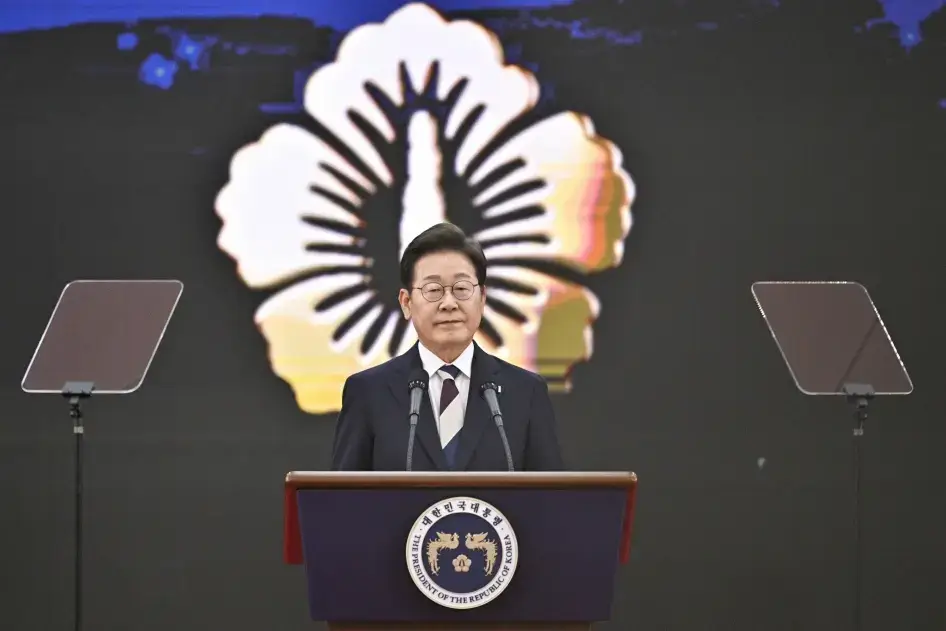

The winds of change are sweeping through South Korea as President Lee Jae-myung’s administration ushers in a transformative era for human rights. Following the tumultuous impeachment of former President Yoon Suk-yeol—whose brief but controversial martial law declaration in December 2024 ignited nationwide protests—South Korea stands at a pivotal crossroads. Lee’s inauguration in June 2025 signaled not just a political shift but a profound recommitment to democracy, equality, and human dignity. This new leadership is already driving groundbreaking reforms, from recognizing same-sex partnerships to pioneering corporate accountability, while confronting systemic discrimination and redefining North Korea engagement.


The Post-Yoon Reckoning: Restoring Democratic Foundations

The shadow of President Yoon’s administration looms large over South Korea’s human rights landscape. His 15-month tenure saw alarming erosions of civil liberties: criminal defamation lawsuits targeting critics, misuse of the National Security Law to stifle dissent, and the near-catastrophic martial law decree of December 3, 2024. That night, Yoon ordered the arrest of opposition leaders and the occupation of media offices—a move the Constitutional Court later deemed illegal. This authoritarian overreach catalyzed Lee’s rise, with his victory framed as a popular mandate to restore democratic integrity.

Korean culture content

Lee’s inaugural pledge—“I will be a president who ends divisive politics”—resonated deeply in a nation bruised by polarization. His “basic society” vision promises sweeping welfare reforms: universal income guarantees, expanded childcare, disability-inclusive care systems, and a 4.5-day workweek. More critically, he has prioritized institutional safeguards against future abuses, including plans to restructure the Supreme Court and prohibit martial law declarations without legislative approval. These measures aim to heal the fractures exposed during Yoon’s crisis while embedding resilience into Korea’s democracy.


Breaking Barriers: Landmark Advances in Equality

South Korea’s judiciary set a revolutionary precedent in July 2024 when the Supreme Court ruled that denying health insurance benefits to same-sex couples constitutes unconstitutional discrimination. The case—brought by So Sung-uk after the National Health Insurance Service revoked his dependent status—marked Korea’s first legal recognition of same-sex relationships. In a society where 70% oppose marriage equality, this verdict was seismic. The court’s reasoning was unequivocal: excluding LGBTQ+ couples from social security systems violates human dignity and the right to happiness.
Building on this momentum, Lee’s administration is now championing the long-stalled Comprehensive Anti-Discrimination Act. First proposed in 2006, this landmark legislation would outlaw bias based on gender, sexual orientation, disability, age, or socioeconomic status. Past versions repeatedly collapsed under conservative religious opposition, but the political calculus has shifted. Lee’s Democratic Party, empowered by public outrage over Yoon’s authoritarian misstep, is leveraging its legislative majority to finally enact this keystone reform.
Corporate accountability is also being redefined. In June 2025, lawmakers reintroduced the Corporate Human Rights and Environmental Due Diligence Act—Asia’s first mandatory human rights law for businesses. Spearheaded by Rep. Jung Tae-ho, the bill requires firms with 500+ employees or ₩200 billion revenue to audit supply chains for labor abuses and environmental harm. This positions South Korea as a regional leader in ethical capitalism, directly contrasting with Yoon’s corporate-friendly policies.


Confronting Enduring Challenges: Gender, Digital Crimes, and North Korea

Despite progress, entrenched inequalities persist. South Korea’s gender wage gap remains the widest among OECD nations, while digital sex crimes—especially AI-generated deepfakes targeting young women—surged 227% under Yoon. Lee’s team is drafting multifaceted countermeasures: tighter platform regulations, survivor-centered investigations, and sexuality education reforms emphasizing consent. The administration is also accelerating pay-transparency laws and expanding childcare subsidies to dismantle structural barriers to women’s economic participation.
North Korean human rights, long politicized, are receiving renewed focus. Lee’s government fully activated the 2016 North Korean Human Rights Act—neglected under previous administrations—by appointing Ambassador Lee Shin-wha to lead international cooperation. Domestically, it established July 14 as “North Korean Defectors’ Day” and funds NGOs supporting escapees. Abroad, South Korea is resuming co-sponsorship of UN resolutions condemning Pyongyang’s rights abuses, signaling a return to principled diplomacy after Yoon’s erratic engagement.


Cultural Crossroads: Tradition Meets Transformation


These policy shifts reflect deeper cultural currents. South Korea’s Confucian heritage traditionally emphasized hierarchy and conformity, but younger generations are driving demand for inclusive modernity. The same-sex insurance ruling, for instance, emerged from years of grassroots LGBTQ+ advocacy, while feminist movements like #MeToo exposed systemic misogyny. Yet conservative resistance remains potent: evangelical groups condemned the Supreme Court decision as “judicial activism,” and Lee’s own ambivalence toward LGBTQ+ rights—he opposes unilateral pro-LGBTQ+ laws without “social consensus”—highlights the tension between progressive governance and societal conservatism.
The administration’s “basic society” framework seeks to navigate this divide by universalizing rights. By guaranteeing housing, healthcare, and dignified work for all—regardless of identity—it reframes equality as collective uplift rather than zero-sum identity politics. This pragmatic universalism may prove crucial for sustaining reforms in a polarized nation.


The Road Ahead: Global Leadership or Domestic Gridlock?


President Lee’s ambitions face significant headwinds. Funding his expansive welfare agenda requires navigating fiscal constraints and opposition criticism. The Democratic Party’s legislative dominance helps, but entrenched interests—from corporate lobbies to religious groups—will resist transformative change. Moreover, North Korea’s January 2025 abandonment of reunification dreams complicates human rights advocacy, though Lee’s international coalition-building offers new pathways.
South Korea’s human rights revival under Lee Jae-myung represents more than policy change—it’s a reclamation of the nation’s democratic soul after authoritarian regression. By marrying legal equality with economic dignity, confronting digital-era violence, and centering marginalized voices, this new chapter could position Korea as Asia’s human rights beacon. As one defector-activist observed: “When rights expand for the most vulnerable, freedom grows for everyone.” For a nation still healing from division, that promise holds profound power.

The rhythmic dance of polka dots across fabric isn’t just a trend—it’s a visual symphony that has transcended centuries. From medieval Europe’s dark associations to the runways of Seoul Fashion Week 2025, dotted patterns have evolved into icons of playful sophistication. Similarly, retro designs—mid-century atomic motifs, Memphis-inspired abstractions, and psychedelic swirls—have reclaimed the spotlight, merging nostalgia with avant-garde innovation. This season, K-fashion isn’t just embracing these patterns; it’s redefining them with audacious scale, unexpected textures, and a distinctly Korean flair for balancing tradition and rebellion.

The Journey of Polka Dots: From Plague Symbol to Pop Culture Icon

The story of polka dots began under ominous circumstances. In medieval Europe, irregular dotted fabrics resembled the rashes of leprosy or plague, making them symbols of disease and avoidance. This perception shifted dramatically with the Industrial Revolution. Mechanized looms perfected the art of symmetrical dots, transforming them into emblems of technical prowess. By the 1840s, Czech immigrants popularized the polka dance across America, and dotted garments became uniforms for dance clubs. Women sported them as markers of identity, with dot colors signaling club affiliations—a precursor to modern subcultural fashion statements. The term “polka dot” itself emerged during this era, though its connection to the dance remains debated.
Hollywood later cemented the pattern’s cheerful persona. Norma Smallwood’s polka-dot swimsuit as Miss America 1926 sparked a national craze, while Marilyn Monroe and Lucille Ball turned dots into symbols of glamour. Minnie Mouse’s red-and-white dress became a cultural touchstone, embedding the pattern in collective memory. This transformation—from omen to whimsy—reflects fashion’s power to rewrite narratives, a theme Korea echoes today by repurposing historical motifs into contemporary art.

Cultural Threads: Dots as Global Storytellers

Beyond the West, dotted patterns carry deep cultural resonance. In Japan, the term kusama (dots) is central to traditional textiles and festivals, famously embodied by artist Yayoi Kusama. Her immersive installations, like the Infinity Rooms, explore dots as cosmic metaphors—”Our earth is only one polka dot among a million stars.” This philosophy resonates in K-fashion’s minimalist dot prints, where asymmetry and scale evoke a universe in motion.
West African mud cloth, or bògòlanfini, offers another dimension. Artisans in Mali hand-dye cotton with fermented mud, creating dot-like geometric patterns that narrate tribal history. Each symbol denotes proverbs, social status, or ancestral wisdom—a practice mirrored in Korean designers like Leesle, who incorporate dot clusters as visual poetry. Meanwhile, 1950s Americana—think poodle skirts and diner aesthetics—reappears in Korean streetwear through cropped polka-dot cardigans paired with pleated skirts, bridging continents with a single motif.

Retro Patterns Resurgent: Atomic Age to Memphis Madness

Retro patterns thrive on cyclical nostalgia, and 2025 marks a zenith for their return. Mid-century modernism—defined by organic curves and atomic motifs—dominates interiors and apparel. Designers like Pushbutton reinterpret Arne Jacobsen’s “Egg Chair” contours into coats with spherical buttons, while atomic starbursts adorn unisex bucket hats. This “vintage meets modern” trend, dubbed “Warm Luxury,” blends 1950s optimism with sustainable practices: upcycled bomber jackets feature laser-cut dot lattices, nodding to both past and planet.
Memphis Design, the 1980s postmodern movement, injects irreverence into current collections. Characterized by clashing colors, squiggles, and terrazzo dots, its influence is unmistakable in brands like Kijun. Their oversized hoodies marry electric-blue polka dots with zigzag hems, while Ganni’s Seoul pop-up showcased pixelated dot-dresses echoing Ettore Sottsass’s rebellious ethos. Even corporate K-fashion embraces this: LG’s collaboration with Sacai transformed refrigerator panels into Memphis-inspired dot canvases, proving retro’s adaptability.

The 2025 Revolution: Polka Dots Reimagined

This year, polka dots aren’t just back—they’re revolutionary. Spring 2025 runways declared dots the “it” pattern, with designers amplifying scale and context. At Milan Fashion Week, Moschino sent models down in polka-dot bralettes layered under sheer skirts, while Jacquemus reimagined 1950s pencil skirts with micro-dots so dense they resembled static. Korean labels added local nuance: Miss Gee Collection’s hanbok-inspired dresses used gradient dots to mimic ink wash paintings, and We11done paired asymmetrical dot sweaters with tailored baji trousers.
Street style reveals equal innovation. Seoul’s Apgujeong district buzzes with “clashing dots”—outfits combining macro-polka trousers with micro-dot scarves. TikTok tutorials showcase “dot stacking”: sheer polka-dot blouses layered over turtlenecks for winter, or dotted fishnet tights under shorts for summer. The trend’s versatility shines in gender-fluid styling; K-pop star Taeyong’s recent airport look featured a unisex jumpsuit with embossed dots, proving the pattern’s universal appeal.

Styling the Dot: K-Fashion’s Modern Playbook

Embracing dotted fashion requires balancing boldness with intention. For daytime polish, pair a black-and-white polka-dot maxi skirt (like those by Low Classic) with a structured blazer and minimalist sneakers. This “retro minimalist” approach lets the pattern dominate while clean lines ground it. Evening looks invite drama: try a slinky slip dress with metallic dots (inspired by Carolina Herrera’s 2025 collection) paired with chunky boots—a nod to Seoul’s underground club scene.
Retro patterns demand similar nuance. Atomic motifs work best as accents: a scarf with starbursts elevates a monochrome suit. Memphis-style chaos shines in small doses—a bucket hat with terrazzo dots adds playfulness to tailored sets. Sustainability is key; seek vintage polka-dot silks or support Korean designers like Minju Kim, who use digital printing to reduce waste. Remember, confidence is the ultimate accessory: when BTS’s Jungkook wore a polka-dot harness over a plain tee, he demonstrated how dots transform basics into statements.

The Unbroken Circle: Why Dots Endure

Polka dots and retro patterns persist because they mirror cultural evolution. They’ve journeyed from medieval superstition to symbols of joy, surviving through industrial revolutions and digital ages. In Korea, this resilience resonates deeply; dots represent both continuity (as in traditional bojagi wrapping cloths) and innovation (like AI-generated dot patterns in Hyundai’s meta-fashion line). As 2025’s trends prove, these patterns are more than decoration—they’re visual language. They whisper of Yayoi Kusama’s infinite universes, Memphis design’s rebellious laughter, and the meticulous stitches of Mali’s mud cloth artisans.
In K-fashion, dots and retro motifs become bridges—between history and futurism, individuality and collective identity. They remind us that fashion, at its best, is a dialogue: a dotted dress isn’t just worn; it converses with centuries of artistry. So, whether you choose speckled wide-leg pants or a jacket screaming 1980s squiggles, remember—you’re not just following a trend. You’re joining a timeless, global dance where every dot tells a story, and every pattern pulses with life.
This article celebrates the artistry of dots and retro patterns without citations, focusing on cultural narratives and contemporary applications in K-fashion.*